
Hack Attacks And How To Prevent Them:
The Internet continues to grow at an incredible pace, with more data being placed online than ever before. A significant amount of the data distributed online is extremely valuable, including credit card details, cryptocurrency, intellectual property, personal details, and trade secrets.
The lucrative nature of the Internet has led to a significant increase in the number of hacking attacks from cybercriminals. Cybercriminals use many different tools and techniques to gain access to the sensitive information that is found online. They often attack websites and network resources in an effort extort money or steal assets from organisations. And sometimes it may be just to terrorize their target for fun. In this scenario your Facebook or Instagram account may be targeted as their is mostly no monetary gain attached to this kind of hack. This is usually done by rookie hackers.
To protect yourself and your business against cybercriminals, it is important to be aware of how website hacking techniques work. This guide will share the most common cyber attacks, to help you prepare for a malicious attack. More and more people are making the transition to acquire and store intellectual property online. Whether you are aware of it or not, whether you like it or not, whether you agree with it or not, the truth is the internet and A.I (artificial intelligence) is slowly taking over every aspect of life and sooner or later it will affect everybody.
But with the many advantages and endless possibilities of the web comes a
significant downside. Hacking!!! It is the most daunting aspect of the
World Wide Web (www).
But luckily for you it doesn’t have to be daunting anymore as there are many ways to deal with
it and to prevent it. But first we must consider the most common types of hacks.
Phishing:
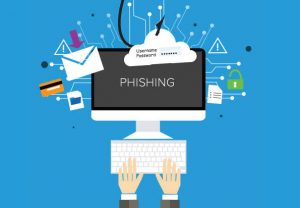
This is one of the most common and less complex hacks. Users of a website
are sent fraudulent emails that look like they have come from the website. The user is asked to
divulge some information, such as their login details or personal information. The hacker can use
this information to compromise the website.
A hacker can also duplicate a website/app or a login form and trick you into login into the
duplicate site. This leaves them with your login credentials which they use to hack into your actual
account.
This is usually the most common method used to hack sites such as; Facebook, Twitter, Instagram e.t.c. Which explains why they ask you to change your password evertime they suspect suspicious behaviour on your account.
Baiting:

This is a classic social engineering technique that was first used in the
1970s. A hacker will leave a device near your place of business, perhaps marked with a label like
“employee salaries”. One of your employees might pick it up and insert it into their
computer out of curiosity. The USB stick will contain malware that infects your computer networks
and compromises your website.
So the next time you want to insert your USB flash drive or phone cable into our computer and we say
no, let’s not have a big fight over it.
Non-Targeted Hacking:

In many cases, hackers won’t specifically target your website. They will be targeting a vulnerability that exists for a content management system, plugin, or template. For example, they may have developed a hack that targets a vulnerability in a particular version content management system. They will use automated bots to find websites using this version of the content management system in question before launching an attack.
They might use the vulnerability to delete data from your website/webapp, steal sensitive information, or to insert malicious software onto your server. This is where the more sophisticated kind of hacks are implemented. The kind we have on numerous occassions been a target of. These are the hacks you ought to be afraid of if you have no idea how to prevent them or stop them or fix them. They include hacks such as;
DNS Spoofing (DNS cache poisoning):
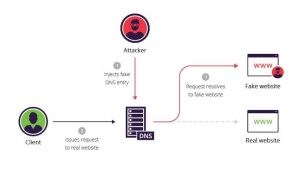
When was the last time you visited a site and you got redirected to like 10 different URLs that open new tabs on your browser and you had no idea what was going on? You were exposed to DNS spoofing. This hacking technique injects corrupt domain system data into a DNS resolvers cache to redirect where a website’s traffic is sent. It is often used to send traffic from legitimate websites to malicious websites that contain viruses . DNS spoofing can also be used to gather information about the traffic being diverted.
Brute-force attack:
.
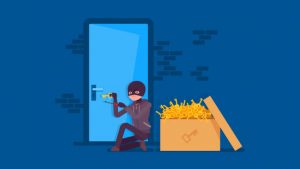
This attack consists of an attacker submitting many passwords or passphrases with the hope of eventually guessing correctly. The attacker systematically checks all possible passwords and passphrases until the correct one is found. A dictionary attack is a kind of brute force attack where the attacker is able to rate keys in order of most probable … least probable, compile a list of the most probable (the dictionary), and test them in that order.
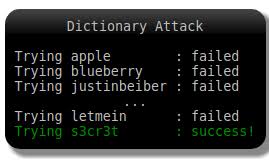
A brute force attack can be automated via scripts to continually attack your website/webapp for hours or even days until the right username and password combination is found to break entry into your site. For those who are wondering, this is the attack we commonly encounter on personal and client sites with one memorable night in particular encountering 80+ unsuccessful attempts on a client’s site. They were unsuccessful mostly because we have measures in place to prevent this and any kind of attack, but make no mistake, it is a deadly attack for individuals unaware of how to handle it. Remember Mr. Robot the series? Yeah this and Phishing are the most common form of hacking Eliot uses. Of course among others.
SQL Injection attacks:
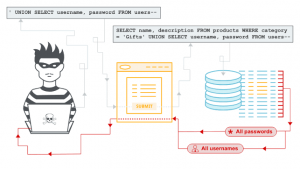
SQL Injection attack is the most common website hacking technique. Most websites use Structured Query Language (SQL) to interact with databases. SQL allows the website to create, retrieve, update, and delete database records. It’s used for everything from logging a user into the website to storing details of an eCommerce transaction. In simple terms, SQL is the reason why Facebook/Twitter and every other site is able to store and remember your password and username and log you in each time you request to log in. SQL is simply a computer language that communicates with a database.
As is true to most if not all databases, they can be manipulated. SQL injection is one of the more complex form of hacking and one of the most deadly as well as it can take time before being noticed. Especially to an untrained eye or to a beginner in databases. There are many online resources that can expound further on the functions of SQL.
An SQL injection attack places SQL into a web form in an attempt to get the application to run it. For example, instead of typing plain text into a username or password field, a hacker may type in ‘ OR 1=1 ‘. If the application appends this string directly to an SQL command that is designed to check if a user exists in a database, it will always return true. This can allow a hacker to gain access to a restricted section of a website. Hackers sometimes use automated tools to perform SQL injections on remote websites. They will attack thousands of websites until they are successful.
Prevention:
One of the most common misconceptions we get from people is, ” Why would someone hack my site? It’s only a small start up business .” This assumption couldn’t be more inaccurate. Hackers will still hack your site to get leads or to store malware secretly. As a matter of fact most people who get hacked don’t even realize they’ve been hacked until there’s been critical damage. The signs are not always so evident to the untrained eye. Hack attacks can also affect your Search Engine Ranking on Google and reduce the traffic you get on your site when Google discovers a hidden malware/virus on your site. Browser’s like Chrome will give warnings to people visiting your site if it detects malware on it. This can greatly affect your reputation. Both reputation and search engine ranking take a significantly long amount of time and alot of effort to recover from.
Consider also that most hacks today are not done by some hacker sitting on a computer somewhere and
selecting a particular target. Most hacks occur as a result of automated bots that scan thousands of
sites daily for vulnerabilities to exploit. The actual hacker may be on a beach somewhere just
waiting to get results.
Bots are not very selective. They’ll hack anything with a vulnerability. Therefore it
doesn’t really matter wether your business is a small start up or a multi-million dollar
business.
We’ve run into atleast 2 or 3 hack attempts everyday for the last year both on personal and client sites.If we had a dime for everytime we encountered a hack attack, We’d have acquired a significant amount of wealth by now.
we can help you develop systems that will prevent these attacks from being successful without you having to lift a finger. If you have or intend to acquire any form of intellectual property then cyber security is simply not something you can afford to overlook.
Prevention is always better than cure. In this day and age, you need more than a developer who can build a website, webapp or an app for you, you need someone who can help you protect your intellectual property as well. Cyber Security is a priority.
In need of Cyber Security or Developer services, holla anytime…
View More Services